
Fentanyl and alcohol are psychoactive drugs that should never be taken together, as they can slow down the central nervous system (CNS) to a dangerous level. Even when combined at minimal doses, they can cause organ damage, increase the risk of accidents and injuries, lead to a potentially fatal opioid overdose, and more.
Read along to learn more about the interaction between fentanyl and alcohol and gain a thorough understanding of how this drug combination can affect your physical, mental, and social well-being.
What Is Fentanyl?

Fentanyl is an extremely potent opioid used to control severe pain that cannot be managed with weaker painkillers. It relieves pain by interacting with opioid receptors in the CNS and is also approved for medical use as an anesthetic.
As a synthetic opioid, fentanyl is human-made and comes in several forms, including:
- Liquid for injections
- Transdermal patches
- Transmucosal lozenges
- Nasal and sublingual sprays
- Buccal and sublingual tablets
Fentanyl is marketed under numerous brand names, such as Actiq®, Fentora®, Sublimaze®, Duragesic®, and Subsys®. It is also available as a generic drug.
As many as 100 times more potent than heroin and around 50 times more potent than morphine, fentanyl has a high potential for opioid abuse, dependence, and addiction. As such, it is treated as a Schedule II controlled substance and can only be obtained by prescription.
Nonetheless, it is also an extremely dangerous—and often deadly—street drug. TNT, Crazy One, Dance Fever, and Goodfellas are some of its most common street names.
Fentanyl Usage in the USA
Here are some statistics that reveal the extent of fentanyl use and abuse in the United States:
- In 2024, the DEA seized nearly 30 million fentanyl pills and over 4,100 pounds of fentanyl powder, with 70% of confiscated pills containing a deadly dose of fentanyl.
- In 2022, synthetic opioid overdose deaths made up 68.4% of all fatal drug overdoses, with nearly 74,000 Americans losing their lives to fentanyl and other synthetic opioids.
- The number of fatal fentanyl overdoses in the U.S. increased by more than 10,000% between 1999 and 2022, growing from 730 deaths to nearly 74,000.
- While it’s virtually impossible to measure the extent of illicit fentanyl abuse, around 507,000 Americans misused prescription fentanyl products in 2022.
- There were close to 123,000 fentanyl-related emergency department visits in 2021. Most patients were white males between the ages of 26 and 44.
Side Effects of Using Fentanyl
Most commonly, fentanyl causes the following side effects:
- Nausea
- Vomiting
- Dizziness
- Confusion
- Headache
- Drowsiness
- Constipation
- Stomach ache
- Trouble breathing
- Pruritus (itchy skin)
- Changes in appetite
Moreover, fentanyl can cause euphoria and sedation, increasing the risk of opioid abuse and addiction.
Polydrug abuse, i.e., mixing fentanyl with other substances without the doctor’s approval, can increase the risk of side effects. It can also lead to serious adverse events, such as extreme sedation and respiratory depression, which may require immediate medical attention. Inform your doctor about any unwanted effects you experience after using fentanyl.
How Long Do Fentanyl Effects Last?
Fentanyl’s effects typically last up to four hours. It has an extremely rapid onset of action—depending on the formulation, you may start to feel its effects within as little as 15 minutes following administration.
That said, both the onset and the duration of its effects may vary depending on the route of administration, dosage, and other factors. Polysubstance abuse, including the combination of fentanyl and alcohol, can also impact how long fentanyl effects last and how long it stays in your system.
What Is Alcohol, and How Does It Work?
Alcohol (also referred to as ethyl alcohol or ethanol) is a psychoactive drug classified as a CNS depressant. It is one of the most commonly used and abused psychoactive substances around the world.
Alcohol is produced through the process of fermentation. During this process, yeast converts sugars in fruits, vegetables, or grains into ethanol and carbon dioxide. For example, wine is made from fermented grapes, whereas vodka can be produced by fermenting grains like wheat or vegetables like potatoes.
Depending on the type of beverage and the amount consumed, alcohol may start to work within 10–45 minutes. Despite falling under the depressant category, it can act like a stimulant when consumed in small quantities. Small amounts of alcohol, therefore, may make you more talkative and energetic, as well as induce euphoria.
However, as a depressant drug, alcohol works by slowing down the function of the CNS, leading to a slowed reaction time, relaxation, reduced coordination, and impaired cognitive function. Larger amounts can also lead to sedation, loss of inhibitions, memory loss, nausea and vomiting, and loss of consciousness.
Although alcohol is not treated as a controlled substance in most countries, including the U.S., it doesn’t come without risk. Excessive or long-term consumption of alcoholic beverages may increase the risk of:
- Seizures
- Weight gain
- Liver damage
- Heart disease
- Various types of cancer
- Blood pressure changes
- Alcohol use disorder (AUD), or alcohol dependence and addiction
Without further ado, let’s learn more about the dangers of mixing fentanyl and alcohol.
Dangers of Mixing Fentanyl and Alcohol
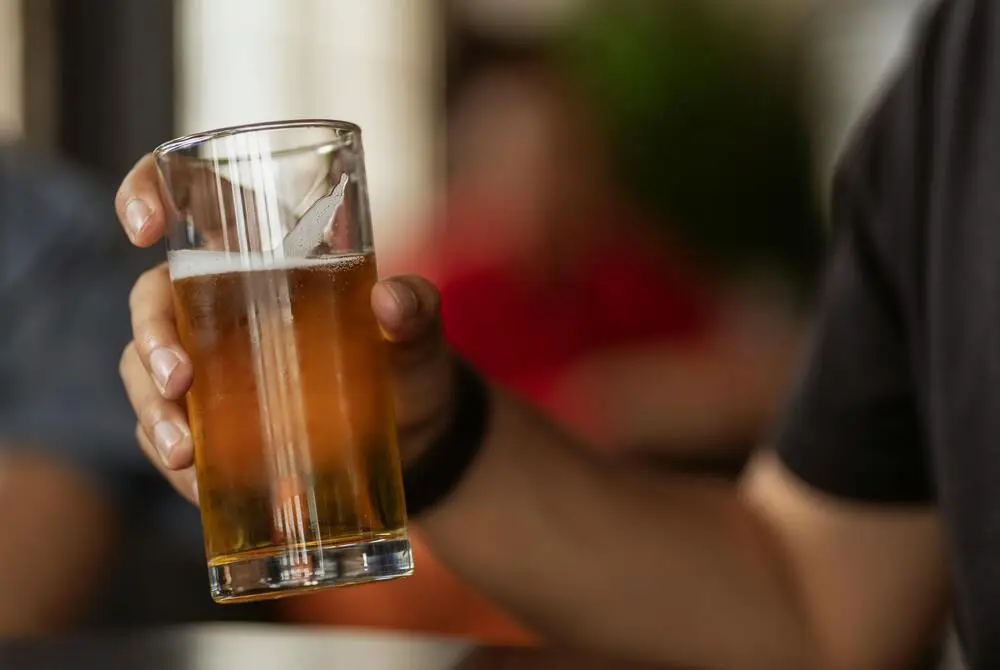
The greatest danger of mixing fentanyl and alcohol is the increased risk of opioid overdose. This combination can also lead to severe side effects, respiratory depression, organ damage, and death.
Taking fentanyl and drinking alcohol even once can have fatal consequences. When taken together, these drugs amplify each other’s depressant effects, dangerously slowing down brain function and increasing the risk of fentanyl overdose.
Opioid overdose is a life-threatening emergency that can only be reversed by promptly administering naloxone (Narcan®). If you notice pinpoint pupils, slowed breathing, discolored skin and fingernails, or other signs of opioid overdose in yourself or someone around you, seek medical help immediately to prevent death.
Moreover, the combination of fentanyl and alcohol can lead to extreme sedation, confusion, disinhibition, poor decision-making, accidents, and injuries. It can also suppress the parts of the brain responsible for life-sustaining functions like breathing. Ultimately, mixing fentanyl with alcohol can have unpredictable effects and is never safe.
Effects of Mixing Fentanyl and Alcohol
Some common short-term effects of mixing fentanyl and alcohol include:
- Seizures
- Delusions
- Confusion
- Memory loss
- Hallucinations
- Slurred speech
- Lightheadedness
- Extreme sedation
- Unconsciousness
- Impaired judgment
- Changes in cognition
- Nausea and vomiting
- Impaired coordination
- Slowed reaction times
- Blood pressure changes
Long Term Effects of Fentanyl and Alcohol Abuse
Common long-term effects of fentanyl and alcohol abuse include substance use disorders (SUD), health complications, mental health decline, and social and economic problems.
Here’s a more detailed breakdown of the long-term effects fentanyl and alcohol abuse can cause:
- Health complications. Combining fentanyl with alcohol increases the risk of kidney, lung, heart, liver, and brain damage. Besides organ damage, this combination can also weaken your immune system.
- Mental health decline. The combination of fentanyl and alcohol may exacerbate depression, anxiety, paranoia, and other mental health conditions you’re suffering from. This drug combination can also lead to cognitive problems like difficulty concentrating and memory loss.
- Social and economic problems. Abusing fentanyl and alcohol can put a strain on your relationships with family and friends. Additionally, polysubstance abuse can lead to unemployment, legal problems, financial stress, homelessness, and so forth.
- Substance use disorders (SUD). Mixing fentanyl and alcohol exposes you to a high risk of developing both opioid use disorder (OUD) and alcohol use disorder (AUD).
What Does Fentanyl Dependence Look Like?
Fentanyl dependence looks like a reliance on the drug, as those dependent on fentanyl cannot function normally without it. Unfortunately, anyone taking this drug can become dependent, including those who carefully follow their doctor’s directions.
If you take fentanyl for a prolonged time, your brain will create more opioid receptors, leading to tolerance. Once you develop tolerance, your usual fentanyl dose will no longer be effective.
Moreover, if you cut back on the drug or stop taking it after becoming dependent, you’ll experience muscle aches, diarrhea, nausea, cravings, insomnia, and other fentanyl withdrawal symptoms. Tragically, the fear of withdrawal drives thousands of Americans to keep taking fentanyl, even when it’s no longer medically necessary.
Getting professional help for fentanyl dependence is the only way to prevent it from developing into an addiction.
Fentanyl Addiction
While opioid dependence is mainly physical, fentanyl addiction is a largely psychological condition. People addicted to fentanyl cannot help but take it, even when opioid use wreaks havoc on their personal and professional lives. Luckily, like dependence, addiction can be treated.
The following behaviors may indicate that you or a loved one is struggling with fentanyl addiction:
- Hiding or lying about fentanyl use
- Feeling unable to stop or reduce fentanyl use
- Being preoccupied with obtaining and using fentanyl
- Continuing to take fentanyl despite the harm it causes
- Mixing fentanyl with alcohol or abusing it in other ways
- Struggling to meet personal and professional obligations
- Showing less interest in hobbies and other previously enjoyed activities
- Trying to obtain fentanyl in any possible way, including stealing and other illegal methods
ANR – The Most Effective Opioid Dependence Treatment
Accelerated Neuro-Regulation (ANR) is a groundbreaking treatment that eradicates opioid dependence by re-regulating the endorphin-receptor system and returning the brain to its pre-addiction state. As the first and only treatment that addresses the root cause of opioid dependence, it has helped close to 25,000 people worldwide regain control of their lives.

Developed by Dr. Andre Waismann, ANR is the safest and most effective opioid dependence treatment. By reversing the chemical imbalance opioids cause to the brain, ANR negates the risk of ongoing withdrawal symptoms and relapse.
Most importantly, ANR is exceptionally safe—even for those with complex medical conditions.
Unlike traditional methods, ANR isn’t a one-size-fits-all treatment; it is tailored to each patient individually. It is only performed in an ICU setting of fully accredited hospitals with state-of-the-art equipment by a team of highly experienced and compassionate board-certified medical professionals.
Better yet, the ANR treatment can help you overcome opioid dependence within a matter of days. The average hospital stay for our patients lasts only 36 hours!
Safety, speed, and effectiveness are just a few of the many advantages ANR has over other treatments. To learn more about the treatment, contact us today for a free, 100% confidential consultation.
Key Takeaways
Fentanyl and alcohol can be—and, unfortunately, often is—a deadly combination. Therefore, you should not combine them under any circumstances.
Now, let’s go over other key points we covered today:
- Fentanyl is an exceptionally potent synthetic opioid used to treat severe pain that has a high potential for abuse, dependence, and addiction.
- Combining fentanyl with alcohol enhances the depressant effects of both drugs, increasing the risk of respiratory depression, overdose, substance use disorders (OUD), severe side effects, and death.
- ANR treatment is the most innovative opioid dependence treatment that can help you make a long-lasting recovery from fentanyl dependence by restoring normal brain function.
Related Articles
Fentanyl vs. Percocet: Differences, Effects & Addiction Risks
Rapid Fentanyl Detox: Risks, Considerations & Alternatives
Fentanyl vs. Heroin: Differences, Side Effects & Treatment