The 3 Pillars of ANR Treatment
#1. Returning Normal Brain Function
Endorphins are neurotransmitters that help alleviate pain, reduce stress, and promote positive feelings, which is why they are also known as natural pain relievers. The brain naturally produces them in response to various internal and external stimuli, such as pain and stress. Physical exercise and other pleasurable activities can also trigger endorphin release.
Endorphins bind to the same receptors in the central nervous system that opioids do, blocking pain signals from reaching the brain. They can also stimulate dopamine release. This “feel-good chemical” brings a sense of pleasure and improves mood.
Under normal circumstances, the brain produces an adequate amount of endorphins in relation to the stimuli it experiences. Once the stimuli have subsided or are extinguished, endorphin levels return to a baseline level. The brain always seeks to return to this state of balance, but prolonged use of opioids makes it increasingly difficult to regulate itself.
#2. Treating Neuroadaptation from Continuous Opioid Exposure
Opioids are potent drugs with pain-relieving properties that mimic endorphins. However, they bind to opioid receptors quicker than the body’s natural pain relievers. Moreover, opioids cause the brain to release an excessive amount of dopamine. Not only does this induce euphoria, but it also makes these drugs highly addictive.
Continuous exposure to opioids eventually suppresses the brain’s natural endorphin production. Every time you expose the brain to an opioid—be it heroin or a prescription opioid—you are depleting the endorphins that your body normally creates to block pain, trigger positive feelings, and carry out other functions.
As natural endorphin production decreases, the central nervous system simultaneously begins to increase the number of active opioid receptors in anticipation of binding to the opioids that have been flooding the brain.
As more and more receptors are created, you’ll require increasingly greater amounts of opioids to satisfy the neuro-biochemical demand that is now present in the brain. This is a sign that tolerance has developed.
The increase in the number of opioid receptors is now associated with a ravenous biophysical and neurochemical hunger known as “cravings.”
Effectively, the brain is now in a state of imbalance, and cravings are a manifestation of physical change. Unless the endorphin-receptor balance is restored to its original condition, you will find yourself caught in a perpetual cycle of opioid abuse, relapse, and dependence.
#3. Regulating the Endorphin-Receptor System
Accelerated Neuro-Regulation aims to bring the nervous system back into balance. ANR accomplishes this by modulating it to decrease opioid receptor production while allowing the body to resume proper endorphin production levels.
This treatment also allows unnecessary opioids to be metabolized and eliminated from the body.
By achieving this cellular, neurochemical, and endorphin-receptor re-balance, ANR renders opioid cravings—the hallmark of opioid dependence—non-existent.
The ANR treatment is conducted under deep sedation to avoid the active suffering of opioid withdrawal, which helps patients complete the treatment seamlessly. As a result, unlike most conventional treatment programs and rehab facilities, ANR eliminates the chance of drop-outs.
How ANR Treatment Was Developed
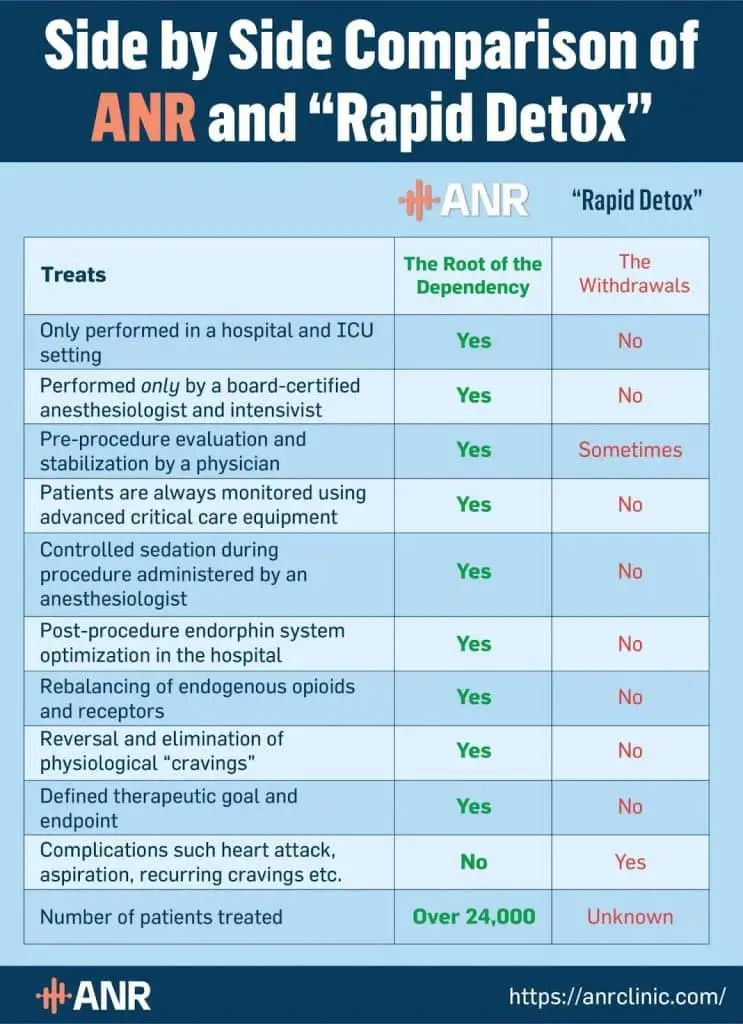
The ANR treatment was developed by Dr. Andre Waismann, an intensive care medicine physician who pioneered rapid detox in the 1990s.
Before redefining the therapeutic goals for treating opioid dependence, Waismann treated patients using Ultra-Rapid Opiate Detox (UROD).
In 1997, he ushered in a new era of opioid addiction treatment by developing Accelerated Neuro-Regulation (ANR)—the first and only opioid use disorder treatment that regulates the endorphin-receptor system and treats opioid addiction at its root.
As the ANR treatment developer and the ANR Clinic’s founder, Dr. Waismann has helped tens of thousands of people overcome opioid dependence and regain control over their lives.
In addition to helping individuals combat opioid addiction, Dr. Waismann and his team are also committed to fighting the opioid crisis globally.
For this reason, you can find ANR centers—all of which adhere to the highest standards of care, quality, and safety—in:
- North America (Tampa, Florida, United States)
- South America (Goiânia, Brazil)
- Europe (Thun, Switzerland)
- Asia (Ashkelon, Israel)